


What if keeping your dog’s coat fresh between grooms took only a few gentle minutes at a time? Dubai’s dust, sand and outdoor debris can settle into the coat quickly, while loose fur and small tangles build up between appointments. A simple routine can help you keep dog coat clean between grooms without turning every day into bath day.
It’s natural to wonder how often to brush, which tool suits your dog’s coat, and whether a knot is safe to tackle at home. The answer depends on coat type. Regular, gentle care is often more comfortable than trying to work through tangles all at once, and frequent baths aren’t the only way to keep a coat fresh.
This guide shares a short, realistic checklist for everyday life in Dubai. You’ll learn how to brush and remove surface debris gently, what to do when you spot a knot, and which signs mean it’s time for professional attention. These small touch-ups complement salon grooming. When brushing at home can’t lift built-up dirt, a professional Bath & Brush offers a refreshing reset.
Key Takeaways
- Brief, regular coat care can lift everyday dust and loose fur without replacing baths or professional grooming.
- Match brushing frequency and technique to your dog’s coat, work in small sections, and pause whenever your dog needs a break.
- Choose between brushing, a damp-cloth wipe, and a full bath based on whether your dog needs loose fur removed, surface dirt cleaned, or a more thorough wash.
- Use a weekly check of the coat, paws, collar area, and visible skin to spot missed debris or areas that may need attention.
- When home touch-ups can’t remove built-up dirt, a professional Bath & Brush can help you keep dog coat clean between grooms as part of a thoughtful routine.
Table of Contents
Why Between-Groom Coat Care Matters for Dogs in Dubai
A dog can come home from a walk with dust on the legs, tiny bits of outdoor debris in the coat, or loose fur caught beneath a collar. Left alone, these can make the coat feel less fresh and add friction where a harness or collar sits. A calm check after outings helps you spot what needs attention before it becomes uncomfortable.
Between-groom care is light, regular upkeep. It complements bathing and professional grooming, but doesn’t replace a full wash, haircut, or specialist coat treatment when the coat needs more thorough care. The aim is comfort and cleanliness, not a perfect salon finish every day. General dog grooming practices also include brushing and coat care as part of maintaining a dog’s appearance and condition.
What does keeping a dog’s coat clean between grooms mean?
It means brushing gently when appropriate, removing visible surface debris, and taking a quick look through the coat after outings. The right approach depends on your dog’s coat type, length, and how quickly tangles form. These brief touch-ups help you keep dog coat clean between grooms without adding unnecessary baths. They aren’t a substitute for cleansing, a breed-appropriate haircut, or professional treatment when the coat needs more thorough care.
Why do Dubai walks call for a quick coat check?
Outdoor dust and debris can cling to a dog’s coat during everyday walks. After coming inside, inspect the paws and lower legs, then check where the collar or harness rests. Remove loose material gently rather than pulling at it. A quick check is also a chance to notice a new knot or an area your dog doesn’t want touched.
Keep the routine comfortable and unhurried. Let your dog settle, use a light touch, and stop if brushing seems uncomfortable. Notice what you see and feel without trying to identify a skin condition. If an area appears sore or your dog reacts with discomfort, avoid working over it and seek veterinary advice.
There’s no single brushing schedule for every dog. A short, smooth coat may need only occasional brushing, while a longer or curlier coat can catch debris and form tangles more readily. Time outdoors, coat length, and how easily the fur mats all shape the routine. Let your dog’s coat and comfort guide how often you check and brush.
- After a walk: Look over paws and lower legs for visible debris.
- Along the collar or harness: Check for trapped fur, friction, or small tangles.
- During brushing: Move gently through manageable sections and pause if your dog becomes unsettled.
These small observations make daily care more attentive, not more complicated. Home maintenance works alongside professional grooming, which can provide a more thorough cleanse and coat refresh when brushing and spot-cleaning aren’t enough.
Build a Gentle Brushing Routine Around Your Dog’s Coat
A relaxed brushing routine should feel like a quiet moment of care, not a wrestling match. Settle your dog somewhere comfortable, choose a brush suited to the coat, and keep strokes light. Short sessions let you work through a few areas and continue later if your dog needs a pause. This approach helps keep dog coat clean between grooms while making it easier to notice loose fur or new tangles.
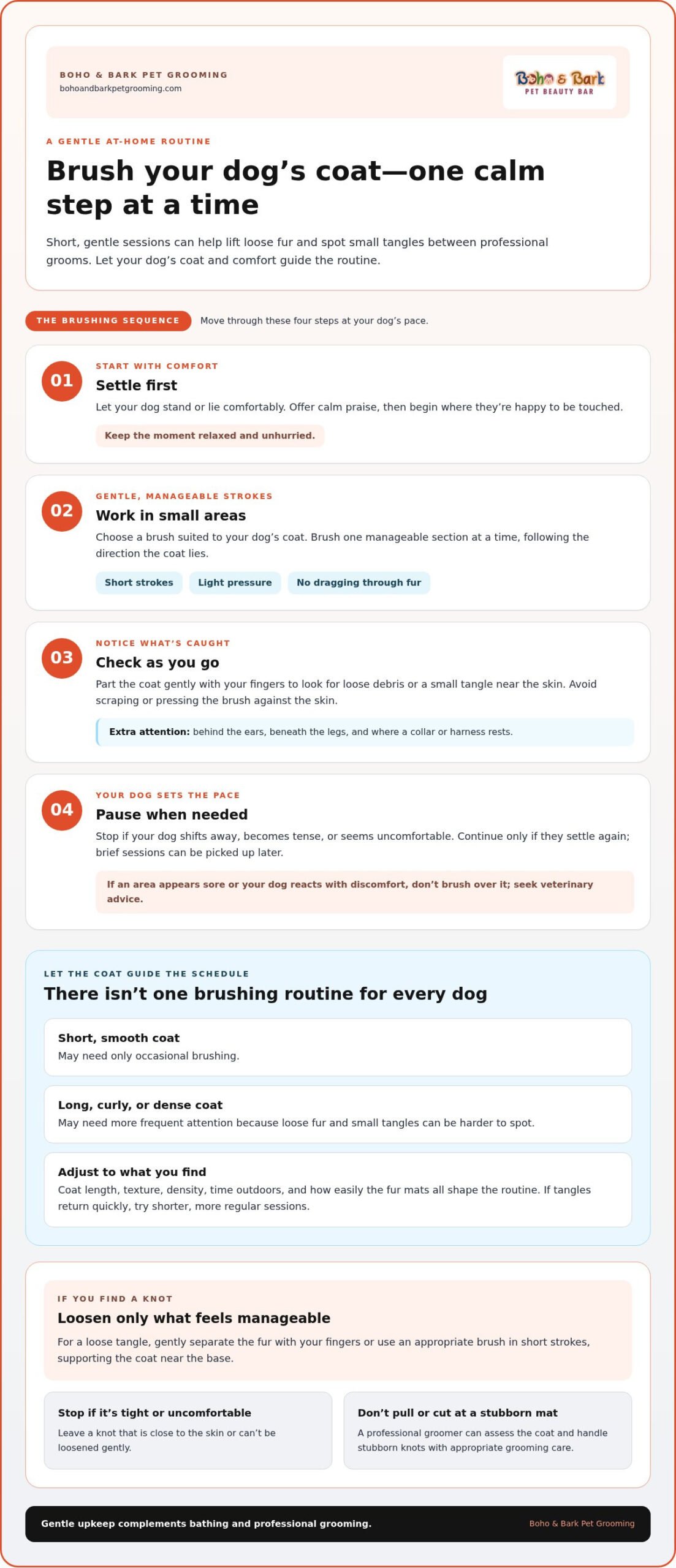
Follow this simple sequence:
- Settle first. Let your dog stand or lie comfortably. Offer calm praise, and begin where they’re happy to be touched.
- Work in small areas. Brush a manageable section at a time, following the direction the coat lies. Use short, gentle strokes rather than dragging the brush through the fur.
- Check as you go. Part the coat gently with your fingers to see whether loose debris or a small tangle is caught near the skin. Don’t scrape or press the brush against the skin.
- Pause when needed. Stop if your dog shifts away, becomes tense, or seems uncomfortable. Resume only if they settle again.
How often should you brush different dog coats?
Coat length, texture, density, and tendency to tangle all influence brushing needs. Long, curly, or dense coats may need more frequent attention than short, smooth coats because loose fur and small knots can be harder to spot. A Poodle’s curls, for example, call for a different routine from a short-coated dog. Adjust based on what you find rather than following one schedule for every dog.
If tangles return quickly, try shorter, more regular sessions. If your dog dislikes brushing, keep each session brief and end before they become unsettled. A coat-specific brush can make home care more comfortable, but there isn’t one tool that suits every texture. A professional groomer can help you understand which brush and technique suit your dog’s coat.
How can you brush without pulling at knots?
Begin with a calm, brief session and reward relaxed cooperation with praise or a small treat. For a loose, manageable tangle, gently separate the fur with your fingers or use an appropriate brush in short strokes, supporting the coat near the base. Pulling a mat away from the skin can tug painfully and make your dog wary of future brushing. Stop if a knot is tight, close to the skin, or uncomfortable to touch.
Take extra care around delicate areas, such as behind the ears, beneath the legs, and where a collar or harness rests. These spots are easy to overlook, and repeated brushing over the same place may irritate the skin. If you can’t loosen a tangle gently, leave it rather than cutting or pulling at it. A professional groomer can assess the coat and handle stubborn knots with appropriate grooming care.
Home brushing is one part of a thoughtful grooming routine. If the coat needs a more complete refresh, professional Bath & Brush care combines cleansing, brushing, specialized shampoos, and coat blowouts.
Compare Post-Walk Cleanups, Brushing, and Full Baths
Not every dusty walk calls for a bath. A quick check and targeted clean can lift surface dirt while leaving the rest of the coat undisturbed. Choose the lightest option that meets the need, then let your dog’s coat dry fully before they settle on bedding or furniture.
| Care option | Best for | Purpose |
|---|---|---|
| Brushing | Loose fur, dry dust, or a coat that needs routine attention | Loosens surface debris and helps smooth the coat without washing it |
| Slightly damp cloth | A small dirty patch on paws, lower legs, or the body | Wipes away local surface dirt without wetting the whole coat |
| Full bath | When the coat needs a more thorough cleanse | Cleans the coat more broadly than brushing or spot-wiping |
What should you do after a dusty or muddy walk?
Check your dog before dirt dries or gets tracked through the home. Look over the paws, lower legs, and underside, where splashes and dust may collect. For a small dirty area, use a soft cloth dampened with water. Keep it away from the eyes and ears, and avoid rubbing grit across the coat. Pat the area dry with a clean towel, then let it dry fully before your dog lies down.
If the coat is damp, wait until it’s dry enough before brushing. Brushing through wet tangles can tug at the hair and feel uncomfortable. Once dry, use gentle strokes to remove loose debris. If you find a tight knot close to the skin, or your dog reacts as though it hurts, don’t pull or keep brushing over it. Stop and leave the area for professional attention.
When is a full bath different from a quick clean?
A wipe is for a local patch; a bath cleans the coat more broadly. If only the paws or lower legs are dirty, spot-cleaning may be enough. If dirt or residue is spread through the coat and everyday brushing can’t lift it, a bath may be the more suitable reset. There’s no single bathing interval for every dog, so avoid bathing simply because a set number of days has passed.
To keep dog coat clean between grooms, match the cleanup to what you can see and feel, and don’t turn every walk into a full wash. For more on what a professional cleanse and brush involves, see Pet Bath and Brush in Dubai: A Fresh, Comfortable Coat. A professional Bath & Brush includes cleansing, brushing, specialized shampoos, and coat blowouts.
Use This Weekly Checklist to Catch Dirt, Tangles, and Missed Areas
A weekly once-over gives you a calm moment to notice what everyday brushing may miss. Choose a time when your dog is settled, use gentle hands, and focus on coat cleanliness and comfort. It doesn’t need to become a full grooming session. If your dog shows discomfort, pause rather than trying to finish the list.
- Scan the coat: Look for visible dust, loose fur, bits of outdoor debris, or small tangles. Part longer fur gently with your fingers to see whether anything is caught beneath the surface.
- Check the collar or harness area: Feel lightly for trapped fur, dampness, or a knot where straps rest against the coat.
- Look behind the ears and under the legs: These tucked-away areas can hide small tangles or debris. Inspect gently without tugging or pulling your dog into an uncomfortable position.
- Inspect paws and between toes: Check for visible dirt or debris, and look over the lower legs. Don’t force the toes apart if your dog resists.
- Notice the skin and coat: Look for changes from your dog’s usual appearance, such as persistent redness, irritation, or an unusual patch. Observe what you see without trying to diagnose it.
This checklist is only for coat and surface cleanliness. Nail clipping, ear cleaning, eye-area care, and dental care are separate grooming needs, not steps to add to this coat inspection.
Which coat areas are easy to overlook?
Start with places beneath straps or close to the body: the collar or harness line, behind the ears, under the legs, and between the toes. Check for trapped debris, lingering dampness, or a small tangle using a light touch. If your dog pulls away, stiffens, or seems worried, stop and give them space rather than holding them still.
When should home coat care stop?
Leave a tight mat, a painful area, persistent irritation, or an unusual coat change alone rather than trying to brush through it. Never cut a mat close to the skin with household scissors, as it can be difficult to tell where the skin lies beneath the fur. A professional groomer can handle difficult tangles; persistent skin concerns are a reason to seek veterinary advice.
Use the check to guide your next step, not to make every coat look perfectly finished. If a knot is loose and your dog is comfortable, gentle maintenance may be enough. If brushing catches, the area feels tender, or your dog becomes distressed, end the session. Stopping early is part of caring for the coat.
For a coat that needs more than a home check can provide, choose a professional Bath & Brush refresh for cleansing and brushing with specialized shampoos and coat blowouts.
When a Professional Bath and Brush Can Refresh the Coat
Home brushing and spot-cleaning help with everyday dust and loose fur, but they can’t always remove dirt that has built up through the coat. If brushing no longer leaves the coat feeling fresh, or surface wipes aren’t enough, a professional Bath & Brush can provide a more thorough reset while complementing your regular care at home.
How does a professional Bath & Brush fit between full grooms?
Bath & Brush at Boho & Bark includes cleansing, brushing, specialized shampoos, and coat blowouts. It focuses on refreshing and brushing the coat. Full Grooming is different: it includes a wash and a breed-appropriate haircut or shave. Choose based on whether your dog needs a cleansing refresh or a haircut as part of the appointment.
A salon visit can help when home brushing and spot-cleaning aren’t lifting built-up dirt, or when the coat needs more attention than a quick routine allows. It doesn’t make daily care unnecessary. Gentle, coat-specific maintenance between appointments helps you notice new tangles and keep dog coat clean between grooms without trying to recreate a full salon session at home.
For a closer look at what a haircut appointment involves, the guide Full Pet Grooming in Dubai: What a Complete Groom Includes explains the distinction between a complete groom and a Bath & Brush.
What can owners do after a salon visit?
Keep care light and consistent. After walks, check the coat for visible debris, and brush in short, comfortable sessions suited to your dog’s coat. There’s no need to stretch a routine into a long grooming session. If your dog shifts away, seems tense, or shows discomfort, pause and return to care later only if they’re comfortable.
Notice how the coat feels and how easily it brushes. If a knot is tight or home care seems uncomfortable, don’t tug at it; leave difficult tangles for professional grooming. If you spot a persistent skin concern, seek veterinary advice rather than trying to address it with grooming alone.
Think of professional grooming and home upkeep as partners: the salon provides a more thorough cleanse, brushing, and coat care, while gentle touch-ups help maintain comfort between visits. If your dog’s coat could use a salon refresh, explore Boho & Bark’s grooming services and choose the care that suits your dog’s needs.
Make Coat Care a Gentle Part of the Week
A comfortable coat doesn’t depend on a perfect routine. It grows from small, kind moments that suit your dog: a quick check after a walk, a few calm brush strokes, and a pause when they’ve had enough. Let your dog’s coat and comfort guide the rhythm, and keep dog coat clean between grooms without making home care feel like a chore.
When it’s time for salon care, choose the support that fits your dog’s needs. Boho & Bark’s Bath & Brush brings together cleansing, brushing, specialized shampoos, and coat blowouts. Full Grooming includes a wash and a breed-appropriate haircut or shave. Both are professional options alongside the gentle attention you give at home.
Ready to plan your dog’s next refresh? Explore Boho & Bark grooming services and find a comfortable next step for your companion. A little care, offered with patience, can make grooming feel more reassuring for you both.
Frequently Asked Questions
Can I use human shampoo to clean my dog’s coat?
Don’t assume human shampoo is suitable for your dog. Choose a product formulated for canine use, and follow its directions, including rinsing the coat thoroughly so no residue remains. If you’re unsure which type suits your dog’s coat, keep the routine simple and use a damp cloth for a small patch of surface dirt. Persistent irritation warrants veterinary advice rather than trying different shampoos at home.
Can I brush my dog while the coat is wet?
It depends on your dog’s coat and the brush, since wet hair can be more prone to tangling or pulling. After a rinse or rain shower, gently blot the coat with a towel and let it dry enough for comfortable brushing. Follow guidance suited to your dog’s coat type, and stop if the brush catches or your dog seems uncomfortable. Don’t force it to save time.
What can I use to wipe my dog’s coat after a walk?
For a small patch of surface dirt, use a soft cloth that’s slightly damp, then pat the area dry with a clean towel. This can help keep dog coat clean between grooms without wetting the whole coat. Keep the cloth and any cleanser away from the eyes and ears. If a cleanser is needed, choose one made for dogs; avoid fragranced household wipes.
Is dry shampoo a safe substitute for bathing a dog?
Dry shampoo isn’t a universal substitute for bathing; whether it suits your dog depends on the product and your dog’s needs. Read and follow the label directions, and don’t apply it to irritated skin. If dirt is spread through the coat or an odor lingers, repeated dry applications may not be the right fix. Consider a proper bath or professional grooming guidance.
How can I keep my dog’s collar from making the coat dirty or tangled?
Check beneath the collar regularly, especially after walks, for trapped dust, damp fur, or small tangles. At home, remove the collar when it’s safe and appropriate, then gently inspect the coat underneath. A collar should sit comfortably for your individual dog. If you’re unsure about fit or notice rubbing, avoid guessing at adjustments and seek guidance suited to your dog.
What should I do if my dog’s coat still smells after cleaning?
A lingering smell may not be solved by repeating a spot-clean. Check whether dirt remains in the coat, but don’t mask the odor with perfume or household products. If the coat needs a broader cleanse, arrange appropriate grooming rather than repeatedly wiping the same area. If the smell persists or appears alongside skin changes, seek veterinary advice to understand what may be causing it.
Can I cut out a mat in my dog’s coat at home?
Avoid cutting close to the skin, which can be difficult to see beneath a mat. If a knot is tight, painful, or hard to loosen gently, stop rather than pulling at it or reaching for scissors. Your dog may move suddenly when uncomfortable, making careful handling harder. Arrange professional grooming for a difficult mat, and leave the area alone until it can be addressed safely.
